
The Underestimated Problem at the Start of Every Acquisition
Before a deal is signed, before due diligence teams get to work, and long before the first negotiations begin, one decision is made that determines everything else: which companies are even considered? The answer to this question should be the result of a systematic, strategy-led search. In practice, it rarely is.
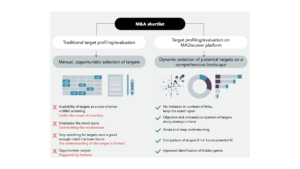
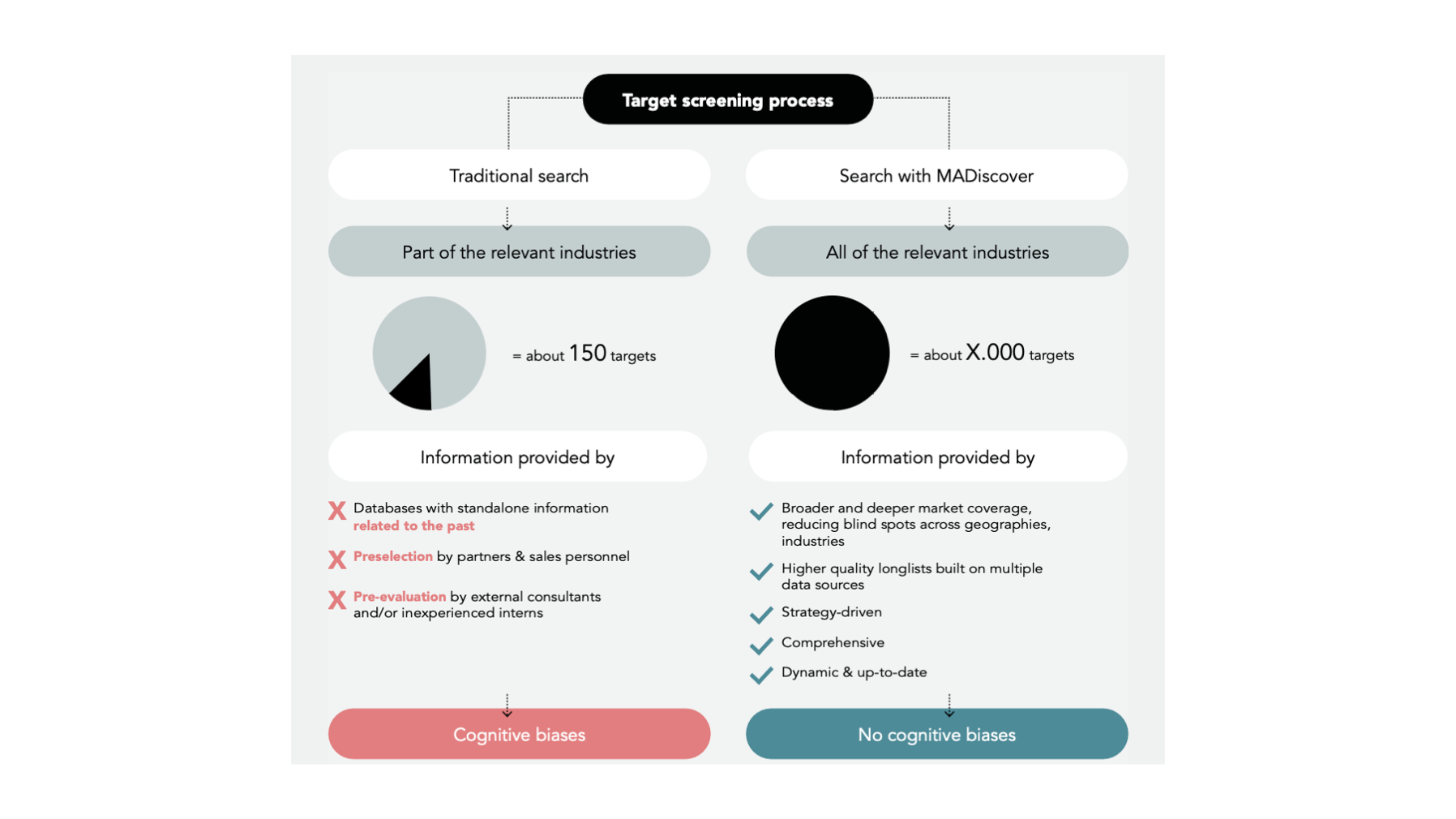
Based on 89 interviews with M&A managers, a consistent pattern emerges: longlists are not built through comprehensive market analysis. They are shaped by network contacts, advisor recommendations, and simple database queries. The result is lists of 20 to 100 targets that feel thorough but often represent only a fraction of the truly relevant market.
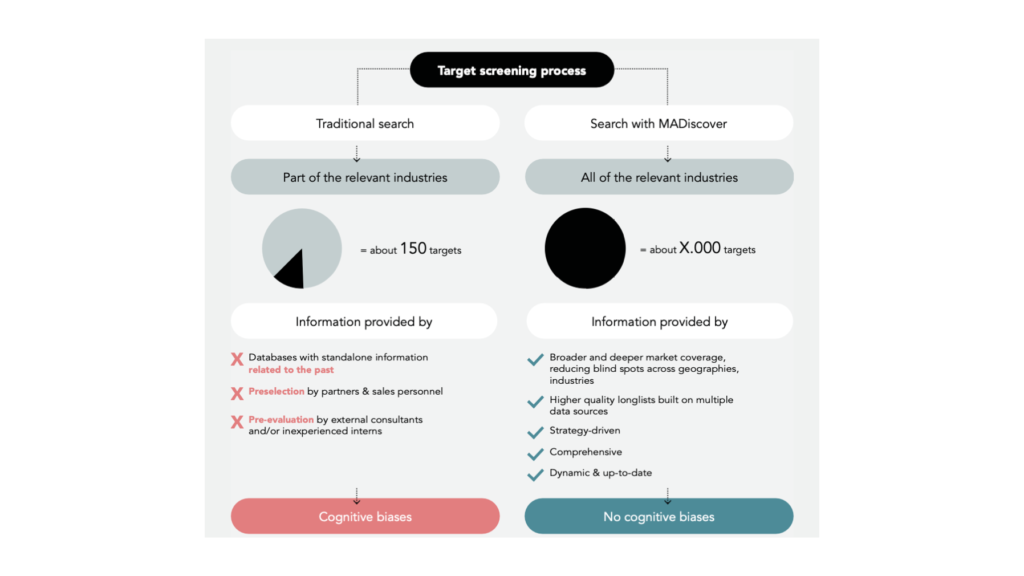
Three Cognitive Biases That Narrow Your Search
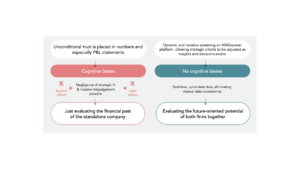
The causes of shortlists that are too short are not laziness or lack of resources. They are human and systemic. Three cognitive patterns play a central role.
Distance bias leads M&A teams to search preferentially in familiar markets and regions. What is geographically or culturally close feels safer. One VP M&A explained it directly: “We have always searched in our immediate context. That is where we feel confident. Searching in another region would be overly complex.” The consequence: blind spots emerge precisely where no subsidiaries exist.
The bikeshed effect describes the tendency to focus on easily measurable criteria when facing complex decisions. Revenue size, industry code, and ownership structure are straightforward to define. Strategic dimensions like technological compatibility or capability fit are not. So the simple criteria dominate.
Post-hoc rationalization prevents the critical reflection that is actually needed. Managers who believe they know their market stop searching. This confidence feels reassuring but is often an illusion. Teams rationalize narrow longlists as pragmatic or focused when they are simply incomplete.
What You Miss and Why It Costs You
Those who start with an overly narrow longlist do not end up making the strategically best decision. They make the best decision among the available options. That is a fundamental difference.
Companies solving similar customer problems in adjacent industries never appear. Firms with complementary technologies remain invisible because no one searched for them. Non-obvious targets that could transform your competitive position are never evaluated.
“With our scoping, we might exclude relevant firms that just do not fall within the boundaries we defined.” (M&A Manager)
If a competitor’s acquisition has ever surprised you, that target was most likely never on your longlist.
The Way Forward: Systematic Search Instead of Convenient Shortcuts
The solution is not spending more time with the same methods. It lies in a fundamentally different approach: algorithm-driven search that structurally eliminates cognitive bias, places strategic criteria at the center, and systematically scans thousands of companies across industry and geographic boundaries.
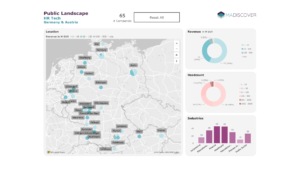
The MADiscover platform can generate longlists of 50 to 500 strategically relevant targets. Not through brute force alone, but through the combination of big data, natural language processing, and strategic expertise. The goal is not the longest possible list but the most complete coverage of the strategically relevant opportunity set.
Because the real problem is not that the shortlist turns out to be wrong. It is that the best candidates never made it onto the shortlist in the first place.
This blog article is based on the white paper by Dr. Mai Anh Dao and Prof. Dr. Florian Bauer / MADiscover (https://www.madiscover.com/whitepaper)