
From Longlist to Shortlist: Where Strategy Gets Lost
From Longlist to Shortlist: Where Strategy Gets Lost
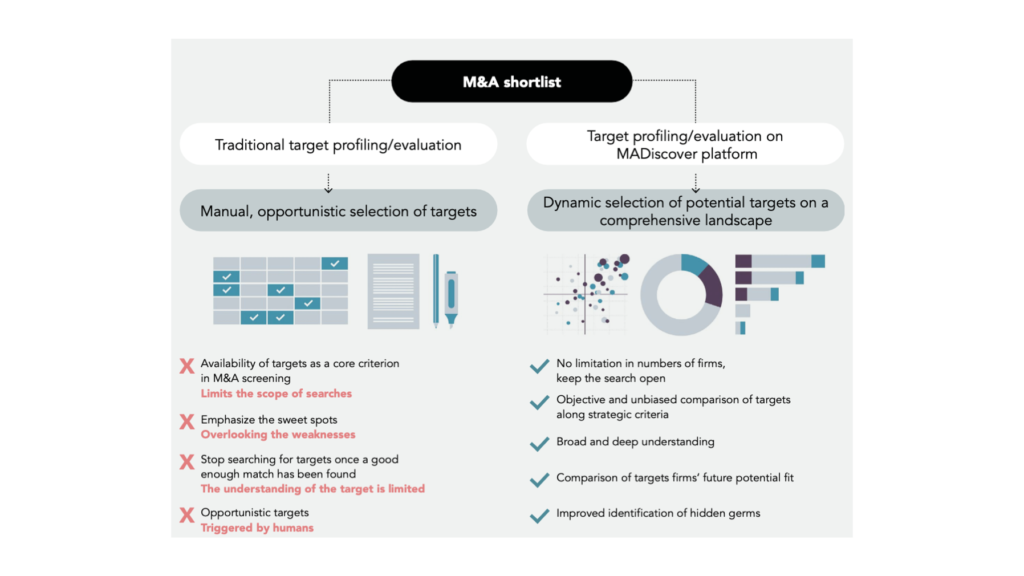
The transformation of a longlist into a shortlist is one of the most critical moments in the M&A process. This is where it is decided which targets deserve deeper evaluation and which are eliminated. In theory, this decision should be driven by strategic considerations. In practice, financial metrics almost always dominate.
The reason is pragmatic: a shortlist needs to be manageable. Teams must make dozens or hundreds of companies comparable. That requires simplification. And the simplest form of simplification is reducing everything to measurable figures: revenue, EBITDA, ROE, cash flow. Unfortunately, these numbers say little about what M&A teams actually need to know.
Why Junior Analysts End Up Setting Strategic Direction
Adding to the problem is who typically performs this evaluation. Shortlisting is often treated as a learning task for junior staff. One senior manager explained: “Research is for junior colleagues so they can learn about our industry.” The result: people without deep industry knowledge apply criteria they can understand. And those criteria are financial metrics.
Strategic information such as innovation focus, technology profile, market positioning, and cultural compatibility is complex, difficult to compare, and hard to capture in a spreadsheet. So it gets left out. Even though it is exactly what determines long-term acquisition success.
Anchoring and the Halo Effect: Two Traps in the Evaluation Process
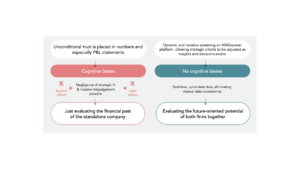
Two cognitive biases amplify the problem. The anchoring effect describes the tendency to rely heavily on the first piece of information encountered. In shortlisting, this means whoever sees the EBITDA margin first evaluates everything else through that lens. Even when strategic information is added later, the financial metric remains the anchor.
The halo effect leads people to infer positive strategic qualities from strong financial performance, even when those qualities were never actually measured. One manager reasoned that if a firm is good at working capital management, it must have a good strategy and good management. This logic feels intuitive but confuses correlation with causation. Financial discipline says nothing about strategic fit.
What Gets Left Behind
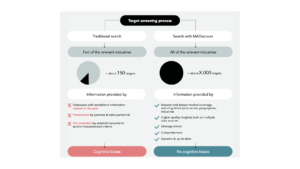
Companies with strong strategic fit but moderate financials get screened out early. Firms that are investing heavily in R&D, entering new markets, or building capabilities look weak on traditional KPIs, even though they may offer exactly what an acquirer needs. Meanwhile, targets that look attractive on paper but offer limited synergy potential advance to deeper evaluation, consuming resources that could be better spent.
“Strategic information would be relevant, but how are we supposed to get to it? In the end, we need a score and a ranking, and that is impossible with strategic information.” (Head of M&A)
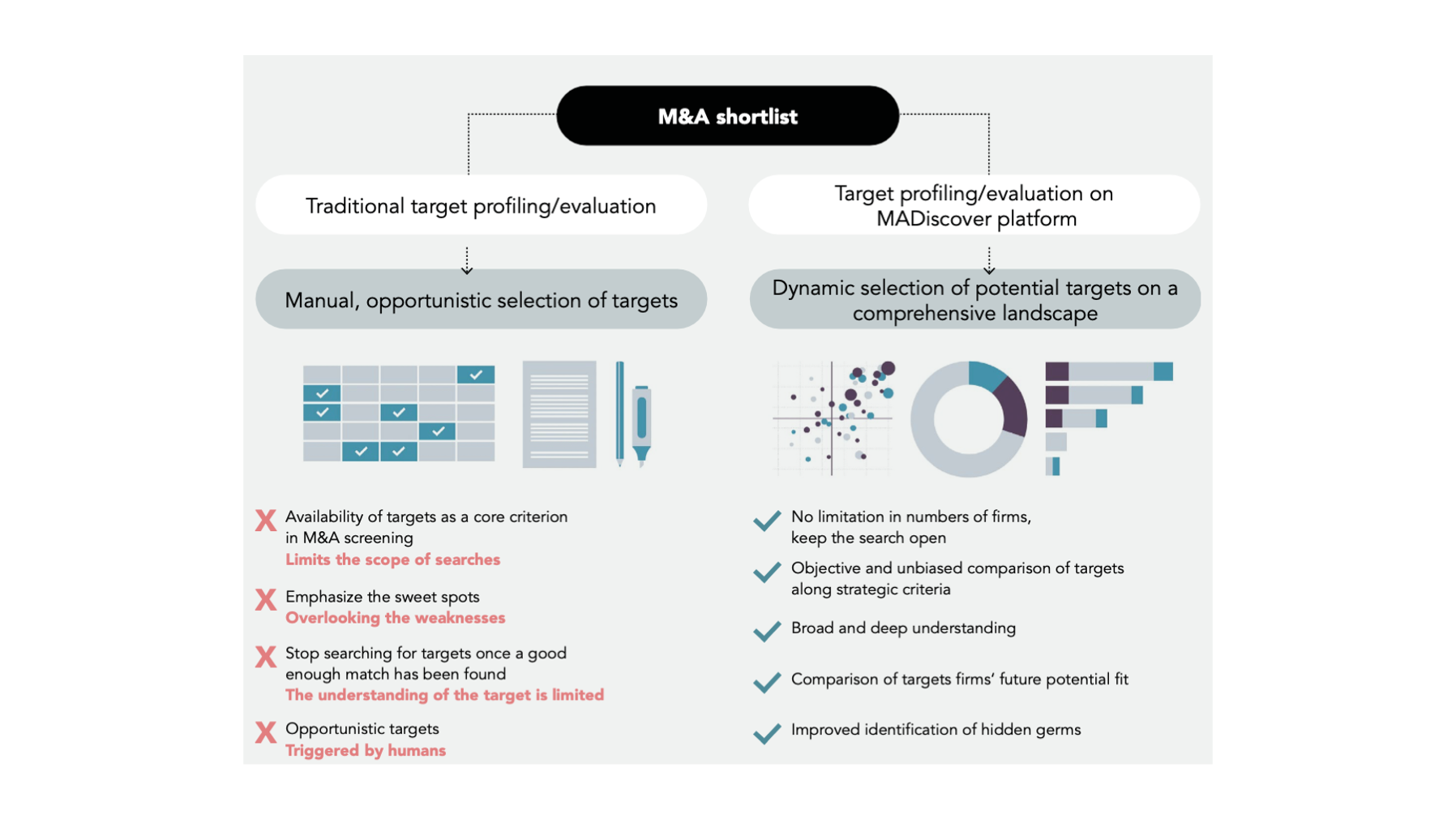
The solution is not to abandon quantification but to expand what gets measured. The AI-powered analysis on the MADiscover platform can today systematically evaluate unstructured text data including company webpages, technology profiles, and press releases, and translate strategic dimensions into comparable scores. What was previously considered impossible to quantify no longer is.
From KPI Rankings to Strategic Assessment
The decisive paradigm shift in modern M&A shortlisting: do not evaluate the past of a standalone company. Evaluate the future potential of both firms together. That means measuring capability fit, product complementarity, and technological alignment as systematically as revenue and margin.
The MADiscover platform enables this approach and does not just deliver better shortlists. It changes the quality of all subsequent due diligence work. Teams that place strategic fit at the center from the beginning ask deeper, more meaningful questions during negotiations. And they make better decisions in the end.
This blog article is based on the white paper by Dr. Mai Anh Dao and Prof. Dr. Florian Bauer / MADiscover (https://www.madiscover.com/whitepaper)