

The Sunk-Cost Moment in Every M&A Process
After spending weeks building a shortlist, no one wants to walk away empty-handed. That is entirely human. In the M&A context, however, it is one of the most common causes of suboptimal acquisitions. The moment when availability becomes more important than strategy is well documented, and it happens almost every time.
Once a target is known, is for sale, or has been recommended by a trusted advisor, a subtle shift begins. The question is no longer whether this is the strategically best candidate. It becomes: why should we not take this one?
Safety Bias: The Fear of Walking Away with Nothing
From a behavioral economics perspective, this is a classic case of safety bias. People perceive potential losses more intensely than equivalent gains. In the M&A context, the prospect of having nothing to show after months of work feels worse than the abstract risk of acquiring a suboptimal target.
This creates pressure to make the best of what is available rather than iterating the search. One manager put it plainly: “I often feel that we miss relevant companies because we focus too much on financials and rely too heavily on our network. But we would not have the capacity to start the process all over again.” Safety bias turns good enough into a felt success formula, even when the strategically right answer might be just one more iteration away.
Authority Bias and Confirmation Bias: When Recommendations Become Self-Fulfilling
Two additional biases reinforce the effect. Authority bias means that recommendations from well-known consulting firms or senior executives automatically receive presumptive credibility without systematic verification. “Our partners abroad mentioned this firm. They are industry experts and know all the relevant movements in our market.” This sounds like solid due diligence. It is not.
Once a target gains advocates, confirmation bias takes over. Positive information is sought and emphasized, while negatives are minimized or dismissed.
“There is no time for complex math. We already have our favorites, and those are the firms we know.” (Senior VP M&A)
What You Lose When You Commit Too Early
The true cost of premature commitment is difficult to measure precisely because the better alternative never appears. What is concretely lost: targets that would have been accessible with slightly more effort but were never evaluated. The opportunity to test assumptions before committing resources. And the chance to discover that a seemingly attractive target offers limited strategic value when objectively compared.
Rankings become driven by availability, authority, and commitment rather than systematic strategic fit. This is the point where M&A processes begin to fail, long before a deal is ever closed.
The Alternative: Iterative Evaluation Instead of Premature Commitment
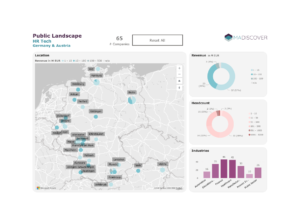
The countermodel is a process that structurally enables and rewards iteration. MADiscover dynamic dashboards allow real-time scenario comparisons. Criteria that can be adjusted when strategic priorities shift. Transparency that reduces authority dependence because all stakeholders work from the same data.
When strategic priorities change mid-process, a new shortlist can be generated in days rather than months. M&A teams no longer have to choose between speed and strategic quality. They can have both.
The ultimate goal is not to decide faster. It is to systematically identify the target that delivers the greatest strategic value, with the confidence to keep the process open as long as it takes to get there.
This blog article is based on the white paper by Dr. Mai Anh Dao and Prof. Dr. Florian Bauer / MADiscover (https://www.madiscover.com/whitepaper)